

The Term "Code-Switching" Has Been Hijacked
A guide to more precise language for how we adjust ourselves in different spaces

Code-switching has a specific meaning rooted in Black people and People of Color navigating predominantly white spaces safely. Watching it get hijacked and colonized on social media this week has been exhausting, made worse by so many white people also confusing it with masking. 🙃
Let me clear this up properly, because language matters, precision matters, and the specific harms code-switching describes deserve to keep their name.
A Note From Me Before We Start
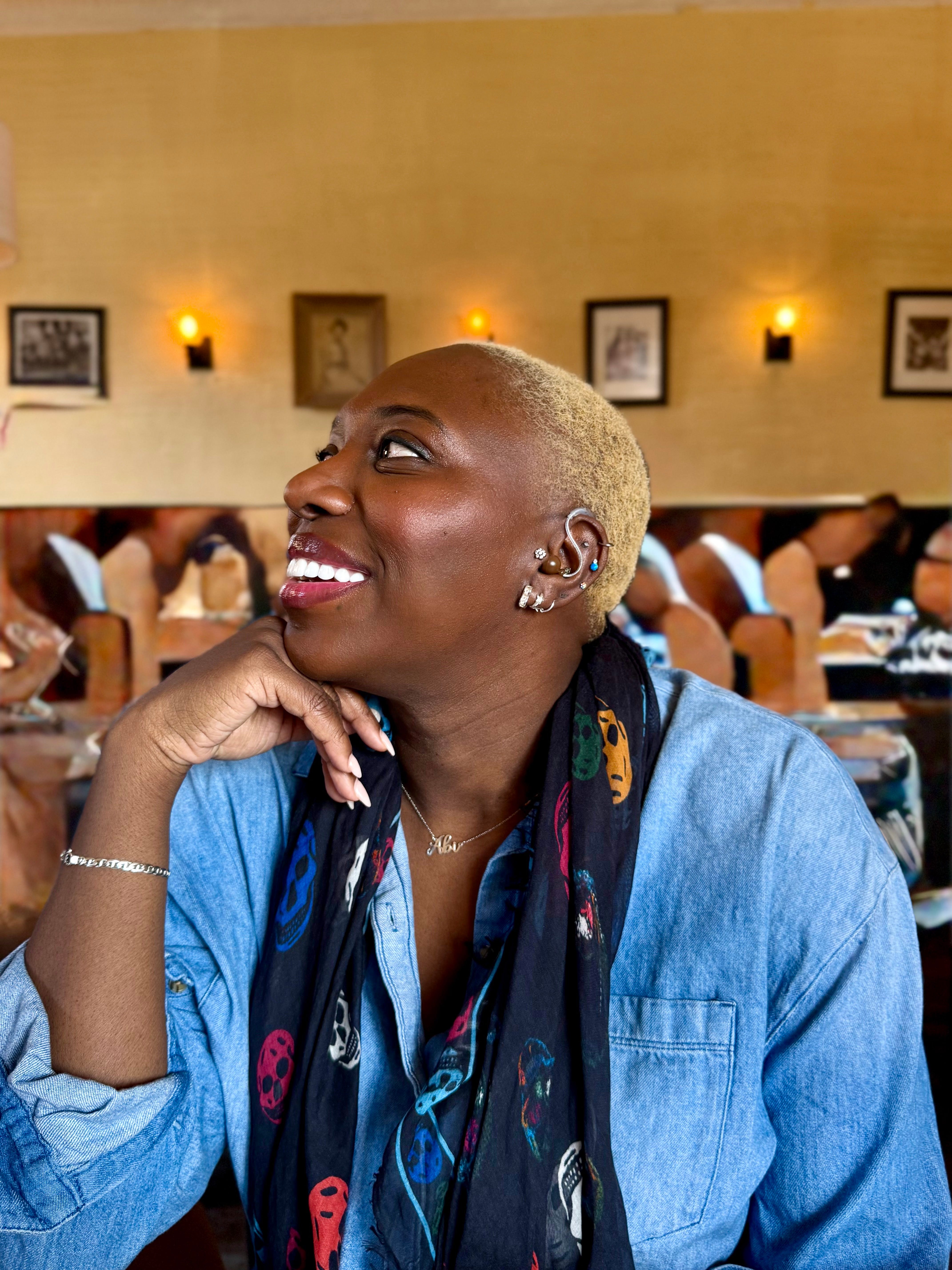
Before I get into the research, I want to be transparent about where I am writing from. I am a Black British woman of Nigerian heritage, born in Lagos, raised in West London, now living in the United States. I am dark-skinned. I have a hearing disability. I have navigated predominantly white professional spaces on both sides of the Atlantic for two decades.
I have code-switched in boardrooms in London, in Seattle, in Copenhagen, in Cairo. I have watched my accent shift depending on who I was talking to, sometimes without permission from my own mouth. I know this experience from the inside out. I also know how many people are now claiming this word for experiences that already have their own precise names, and I understand why that matters both personally and professionally.
Where the Term Actually Comes From
The term originated in linguistics in the 1950s to describe how bilingual and multilingual people shift between languages depending on their audience. Sociolinguist Einar Haugen is credited with early academic use of the term. Over time, it took on a sharper meaning in Black American culture, and eventually across the Black global diaspora. It came to describe the practice of shifting language, tone, mannerisms, and appearance to move through white spaces without penalty.
Code-switching is not a professional polish. It is a survival strategy. One carried into every white workplace, every police interaction, every predominantly white space where being your full self could cost you an opportunity, a promotion, your safety, or your life.
Black people carry the heaviest weight of it. Other People of Color navigate it too. The specificity of the term matters because the specific harm it names matters.
The Research You Need to Know
In 2019, Harvard Business Review published a landmark study titled “The Costs of Code-Switching” by researchers Courtney L. McCluney, Kathrina Robotham, Serenity Lee, Richard Smith, and Myles Durkee. The study documented that code-switching among Black professionals leads to burnout, career stagnation, and a significant depletion of cognitive resources.
The research showed something important. Seeking to avoid stereotypes is exhausting work. It reduces performance. It contributes to burnout. Feigning commonality with coworkers eliminates authentic self-expression. Black employees who code-switch the most report the highest levels of psychological distress.
Additional research published in the American Journal of Public Health found that Black women who experience higher levels of racial discrimination show accelerated biological aging. Specifically, their telomeres, the protective caps on DNA strands, are equivalent to someone 7.5 years older. Chronic stress from constantly adjusting yourself to survive white spaces literally shortens Black women’s lives.
Dr. William A. Smith coined the term racial battle fatigue to describe the physical, emotional, and psychological toll of navigating racism daily. Elevated cortisol levels. Cardiovascular strain. Sleep disruption. Anxiety. Depression. Burnout that goes beyond what any wellness program can address because the source is systemic rather than personal.
This is not a metaphor. Code-switching is a documented public health issue.
What Code-Switching Actually Looks Like
👉🏾 A Black woman rehearsing how to sound “less intimidating” before every workplace meeting.
👉🏾 A Black man softening his voice, slowing his movements, and gripping the steering wheel at exactly ten and two during a traffic stop.
👉🏾 An Indian software engineer flattening their accent on client calls so their expertise is not questioned or ridiculed.
👉🏾 A Black woman straightening her hair for interviews because natural hair has been ruled “unprofessional” in workplaces across the world.
👉🏾 A Latina executive introducing herself with an Anglicized version of her name so clients “don’t struggle” with the real one.
👉🏾 A Black colleague biting their tongue so they are not labeled “aggressive,” while a white peer says the same thing and gets called “passionate.”
That is code-switching. It is switching between your full self and the version of you deemed acceptable to whiteness. It is exhausting. It is expensive. It compounds over time in ways that show up in health outcomes, career trajectories, and mental wellbeing.
Masking Is Not the Same Thing
Masking is a term rooted in the neurodivergent community, particularly autistic people. It refers to hiding neurodivergent traits, such as stimming, avoiding eye contact, or expressing sensory needs, to appear “neurotypical.” Research from the National Autistic Society and academic studies published in the journal Autism have documented severe mental health consequences of masking, including autistic burnout, increased anxiety, and elevated suicidality among late-diagnosed autistic women.
Both code-switching and masking involve editing yourself to survive systems that were not built for you. They are not the same thing. Masking is about neurotype. Code-switching is about race. Conflating them erases the specific violence of each.
Some people, particularly Black and brown neurodivergent folks, experience both simultaneously. The toll is not additive. It is compounding.

The Other Experiences That Deserve Their Own Names
Here is where I need to be precise, because there are real experiences of adjustment that deserve their own names rather than borrowing one that already belongs to a specific community.
Class-based code-switching is real and well-documented, particularly in the UK where I grew up. Research from Queen Mary University of London and studies published in the British Journal of Sociology of Education show that working-class people in Britain adopt “posher” accents, soften their regional accents, change their vocabulary, and adjust their body language to fit into upper-class professional spaces. A study by the Aziz Corporation found that 79 percent of business people surveyed thought a strong regional accent was a professional disadvantage.
Despite Received Pronunciation being spoken by only 3 percent of the British population, it remains the accent most associated with intelligence, professionalism, and authority. Research from Michael Donnelly and colleagues published in 2022 documented that elite British firms still recruit predominantly from those whose accents reveal privileged backgrounds, effectively creating a “class ceiling.” This is often called “class code-switching” or “class passing,” with the class qualifier keeping it distinct from racial code-switching.
Gendered impression management is what happens when women, particularly in male-dominated industries like tech, finance, and law, adjust their voice, tone, communication style, and self-presentation to be taken seriously without being called “aggressive” or “emotional.” Dr. Joan C. Williams, distinguished professor at UC Law San Francisco, has done extensive research on what she calls “the double bind” for women in the workplace. Too soft and you are dismissed. Too firm and you are difficult. Women, especially women of color, are constantly recalibrating between these two impossible poles.
Covering is Kenji Yoshino’s essential concept from his 2006 book Covering: The Hidden Assault on Our Civil Rights. Yoshino, who teaches constitutional law at NYU, defines covering as toning down a disfavored identity to fit into the mainstream. LGBTQ+ people in heterosexual spaces adjusting how they speak, dress, or reference partners are covering. Deloitte’s 2013 covering study, conducted with Yoshino, found that 61 percent of employees cover along at least one axis of identity in the workplace. Yoshino’s framework is powerful precisely because it names something specific without borrowing terminology from another community’s specific experience.
The Compounding Toll of Intersectionality
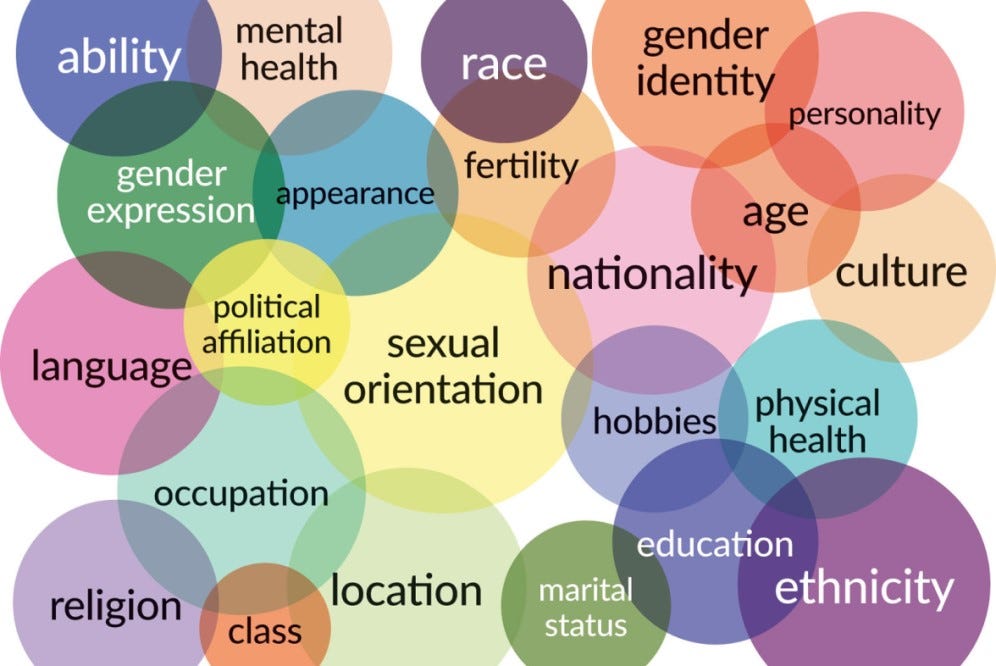
Kimberlé Crenshaw, professor of law at Columbia and UCLA, gave us the language of intersectionality in 1989 for a reason. Identities do not sit in isolation. They interact, and the interaction creates specific realities that cannot be understood by looking at each identity separately.
Black women navigate race AND gender simultaneously. Black queer women navigate race, gender, AND sexuality simultaneously. Black neurodivergent people navigate race AND neurotype simultaneously. The toll is not additive. It is exponential.
Speaking from my own experience, I navigate race, gender, immigration status, dark skin (which brings its own colorism penalties even within Black communities), and hearing disability. Every layer of adjustment costs energy that white, straight, cisgender, non-disabled colleagues never have to spend. It shows up in exhaustion. In illness. In quiet resignations from careers that consumed too much just to be accessed.
The Harvard Business Review study found that Black women face a particular double burden. They are code-switching for their race AND gendered impression management AND often covering other stigmatized identities. The compounding effect is a documented driver of the mass exodus of Black women from corporate spaces.
Why This Matters for Workplace Culture
This is where my work as a workplace culture consultant becomes deeply personal. Organizations spend enormous amounts of money on diversity initiatives while completely missing that their cultures actively require code-switching, covering, masking, and impression management as prerequisites for advancement.
The employees are not the problem. The soil is.
When Black professionals leave your organization citing “culture fit” or “lack of belonging,” what they often mean is they are exhausted from performing an acceptable version of themselves for eight hours a day, five days a week, fifty weeks a year. When neurodivergent employees burn out despite excellent work, it is often because they have been masking so intensely that they have no cognitive resources left for the actual job.
Real inclusion means building environments where people do not have to code-switch to survive. Where natural hair, natural accents, natural names, natural communication styles, and natural neurodivergent behaviors are treated as normal rather than as deviations that need managing.
What White Readers Should Take Away
Not everyone who adjusts their tone at work is code-switching. There are other, more accurate terms for what you might be experiencing:
Audience adaptation. Speaking differently to your boss than to your best friend.
Impression management. Presenting yourself strategically in professional contexts.
Register-shifting. Adjusting formality based on setting.
Covering. Downplaying stigmatized aspects of your identity (if you have one).
Cultural adaptation. Adjusting to workplace or regional norms.
Masking. Hiding neurodivergent traits (if you are neurodivergent).
Using the right word matters. It lets us name specific harms and specific systems. It lets Black and brown people keep language for an experience that was named to describe something we specifically endure. It lets neurodivergent people keep language for their specific reality. It lets working-class people, women, and LGBTQ+ folks name their own experiences with the precision those experiences deserve.
Language is not a competition. It is a tool for clarity. When we flatten specific terms into generic experiences, we lose the ability to name what is actually happening to whom, and we lose the ability to address it.
The Invitation
This is not an attack. It is an invitation.
An invitation to listen, learn, and unlearn. An invitation to sit with your discomfort when you realize you have been using a word that was not yours to claim. An invitation to build precise vocabulary for your own experiences rather than flattening a term that describes something specific.
Please stop centering yourselves in a conversation that was never about you. The Black and brown people who created the language of code-switching to describe their survival strategies did not do it so the term could be diluted into “everyone acts differently at work.”
Kindness is knowing when to sit down and learn. 🧡
Language matters because our lives matter. Precision honors specificity. Specificity honors experience. When we get the words right, we get closer to being able to name what needs to change.
That is worth the effort of choosing the right term.
AA✨
We bloom together or we wilt alone🌸🌱
Sources referenced:
McCluney, Robotham, Lee, Smith & Durkee, “The Costs of Code-Switching,” Harvard Business Review (2019)
American Journal of Public Health research on telomere shortening in Black women
Dr. William A. Smith on racial battle fatigue
Dr. Joan C. Williams on the double bind
Kenji Yoshino, Covering: The Hidden Assault on Our Civil Rights (2006)
Deloitte covering study (2013)
Kimberlé Crenshaw on intersectionality (1989)
Queen Mary University of London research on class code-switching
Aziz Corporation study on British regional accents
Donnelly, Gamsu & Baratta on accent and class ceiling (2022)
Linguistic identity is real. The cognitive burden of moving in and out of what is considered “standard” language is real. The burden is heavy and language is never neutral. Exploring what these words mean, and to whom, is important.
Absolutely fantastic. I really appreciate the time and energy that's gone into this. Its crystal clear.